
Sep 21, 2026
Benjamin Brown
Few molecules have acquired quite the aura of NAD⁺. In longevity clinics, supplement aisles and online forums, it is often presented as cellular fuel with the potential to restore youthful energy, sharpen metabolism and perhaps slow ageing itself. A new systematic review brings that excitement back down to earth—without dismissing the science behind it.
NAD⁺, short for nicotinamide adenine dinucleotide, is a molecule every cell relies on. It helps convert nutrients into energy and supports processes involved in mitochondrial function, stress responses and cellular repair. Because NAD⁺ availability appears to decline with age in some tissues and circumstances, researchers have wondered whether replenishing it could help preserve “healthspan”: the years spent healthy and functioning well.
Study highlights:
- Largest synthesis to date: This PRISMA-guided systematic review evaluated 113 intervention studies (33 human studies, including 28 randomised trials, and 80 rodent studies) examining NAD⁺-boosting strategies for anti-ageing and wellness.
- Biological activity does not equal clinical benefit: Oral NAD⁺ precursors, particularly nicotinamide riboside (NR) and nicotinamide mononucleotide (NMN), consistently increased NAD-related biomarkers and were generally well tolerated, but this did not translate into consistent improvements in clinically meaningful outcomes such as physical function, metabolic health, fatigue or wellbeing.
- Human evidence remains inconsistent: While some studies reported benefits in selected populations or outcomes, the overall evidence did not demonstrate that NAD⁺ supplementation reliably slows ageing or improves broad measures of health in humans.
- NAD⁺ infusions lack supporting clinical evidence: Despite growing commercial interest, the review found no eligible clinical outcome trials demonstrating that intravenous or intramuscular NAD⁺ provides anti-ageing or wellness benefits, highlighting a gap between marketing claims and evidence.
- Clinical takeaway: Current evidence supports NAD⁺ boosters as promising but unproven interventions. Larger, longer-term randomised trials using clinically meaningful endpoints are needed before these therapies can be recommended for healthy ageing.
The review, published in Ageing Research Reviews, gathered 113 intervention studies published between 2010 and October 2025: 33 in humans, including 28 randomised trials, and 80 in rodents.1 It considered several ways of boosting NAD⁺, principally oral vitamin B3-related compounds such as nicotinamide riboside (NR) and nicotinamide mononucleotide (NMN), alongside niacin and nicotinamide. It also examined the increasingly fashionable idea of NAD⁺ delivered by infusion or injection.
The central finding is a neat example of the difference between changing biology and changing lives. Oral NR and NMN reliably do something measurable in people: they raise NAD-related markers in blood or cells. In other words, the supplements reach their intended biochemical target. Over the weeks or months tested, they also appeared generally well tolerated.
But that is not the same as proving that people become healthier, fitter or biologically younger.
When the authors looked at outcomes that matter outside a laboratory—physical performance, metabolic health, blood-vessel function, fatigue, wellbeing and related measures—the picture was mixed. Some studies reported improvements in selected outcomes or particular groups; many found no clear advantage over placebo. The results varied with the population studied, the compound used and the endpoint chosen. There is, as yet, no consistent human evidence that NAD⁺ precursors slow ageing or reliably improve the broad measures of health that consumers are being invited to expect.
That contrast with animal research is striking. In rodent studies, NAD⁺-boosting interventions frequently improved markers of metabolism, mitochondrial activity, inflammation and function. These results make the idea biologically plausible and help explain why the field has attracted so much interest. Yet mouse studies are a starting signal, not a guarantee. The history of medicine is full of treatments that looked compelling in carefully controlled animal models but produced smaller, inconsistent or absent benefits in people.
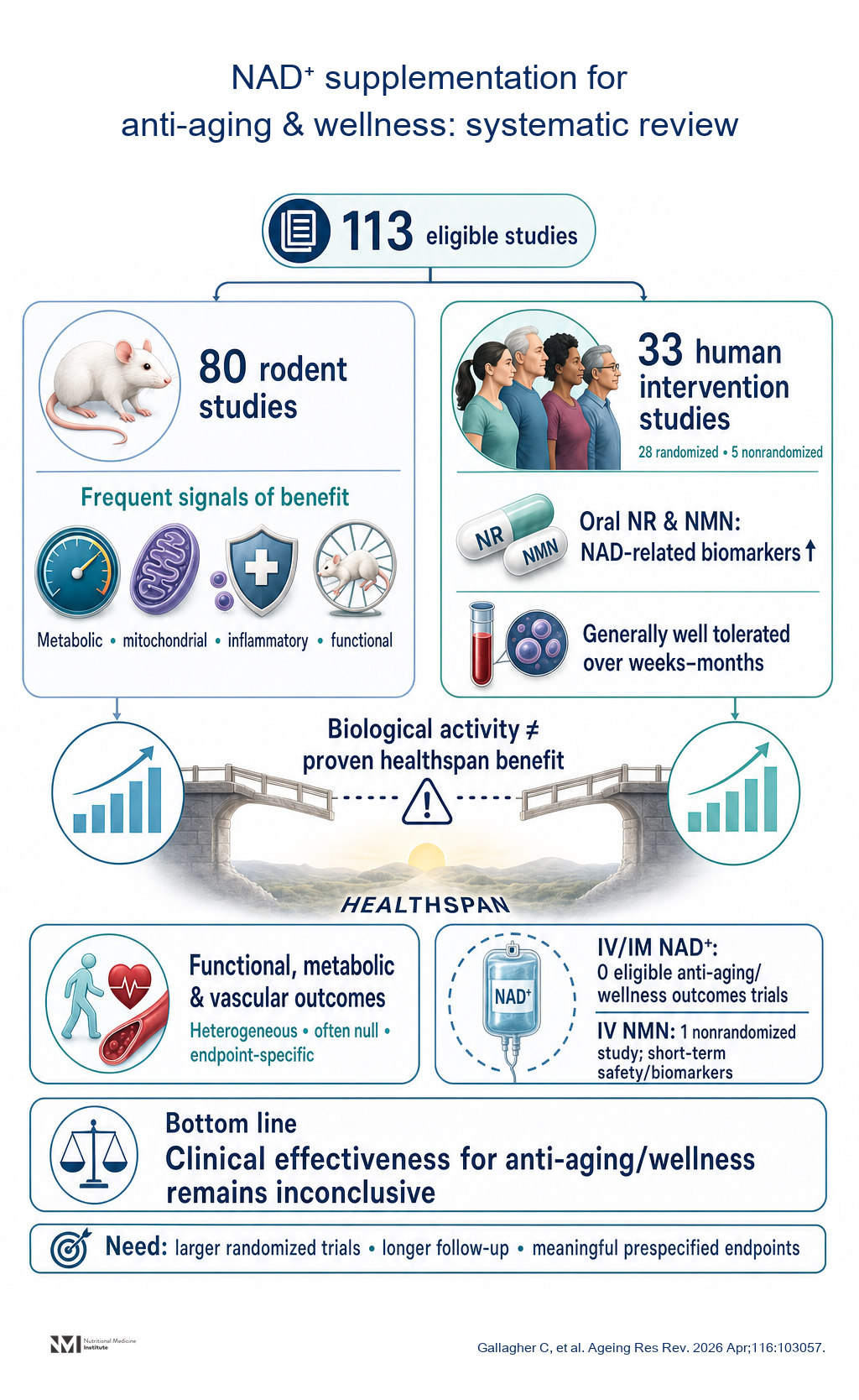
The review is particularly useful on NAD⁺ infusions—the premium treatment offered by some wellness and longevity providers. Despite the visibility of intravenous and injectable NAD⁺, the authors found no eligible clinical outcome trials of intravenous or intramuscular NAD⁺ itself for anti-ageing or wellness. One non-randomised study of intravenous NMN supplied mainly short-term safety and biomarker information, while an NAD⁺ infusion pilot described pharmacokinetics rather than meaningful health outcomes. Put plainly: the evidence does not yet justify treating an NAD⁺ drip as a proven route to rejuvenation.
None of this means that the NAD⁺ story is empty. It means the story is at the stage where science is most vulnerable to overstatement. Researchers have shown that the pathway can be manipulated and that it is connected to intriguing aspects of ageing biology. What they have not established is whether routinely raising NAD-related biomarkers translates into durable, clinically meaningful gains for healthy people.
The authors propose larger, longer randomised trials, with outcomes that people can actually feel or measure in everyday life, rather than relying chiefly on shifts in molecular markers. Those trials should also clarify which compound, dose, population and route of delivery—if any—are genuinely worthwhile.
For now, NAD⁺ boosters belong in the category of promising but unproven longevity tools. They may be biologically active; they are not yet a demonstrated anti-ageing therapy. The most dependable foundations of healthy ageing remain less glamorous and far better established: regular physical activity, good nutrition, sleep, and metabolic health. NAD⁺ may one day add something useful to that list. This review’s message is that it has not earned that place yet.