

Aug 13, 2026
Benjamin Brown
Menopause is often discussed as a list of familiar complaints: poor sleep, low mood, brain fog, fatigue, changing weight and, later, worries about bone health. But a new case report in the Journal of the American Nutrition Association argues that the more useful question may be: how are these symptoms interacting in this particular person?
The paper, from a team at The Centre for Nutritional Education and Lifestyle Management (CNELM), Wokingham, UK, including Dr. Michelle Barrow follows “Patient A,” a 47-year-old working mother on hormone replacement therapy (HRT). She had persistent late-afternoon fatigue, disrupted sleep, concentration difficulties, bloating and mild headaches, alongside a family history of osteoporosis. Her routine medical tests were reassuring, including HbA1c, a standard measure used to assess longer-term blood sugar control. Yet she still felt unwell—and wanted more energy and a plan for protecting her bones.
Study highlights:
- Personalised nutrition tailored to symptoms, lifestyle and family history was used to address menopausal health concerns.
- Higher protein intake, fewer refined carbohydrates and a Mediterranean-style eating pattern were associated with improved daytime energy and reduced snacking after seven weeks.
- Bone health support included dietary protein, vitamin D, omega-3s and progressive weight-bearing exercise to promote long-term musculoskeletal health.
- Sleep and stress improved following reductions in caffeine and the addition of yoga and meditation as part of the personalised plan.
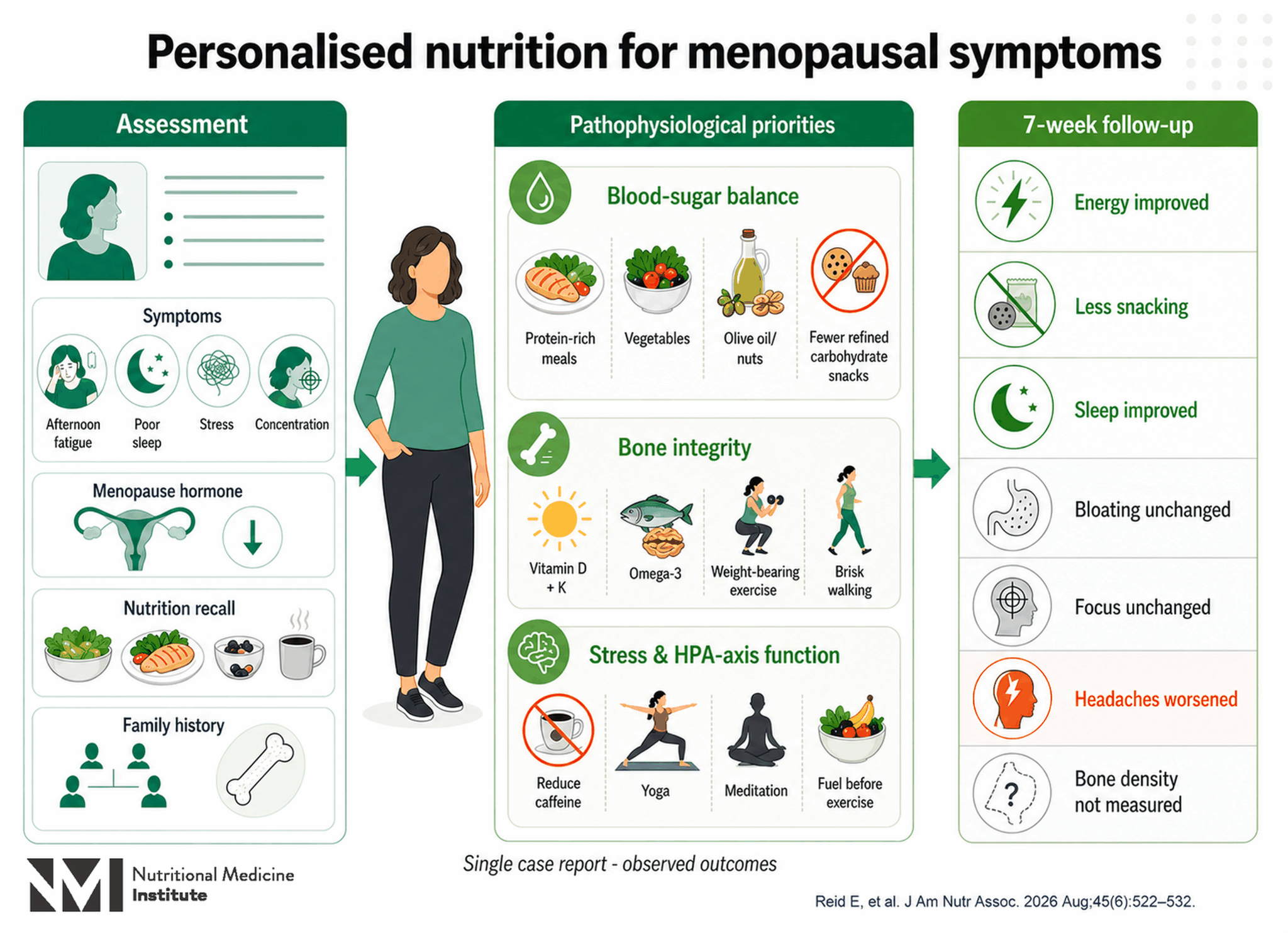
The authors’ answer was personalised nutrition: not simply handing over a menopause-friendly diet, but mapping symptoms, lifestyle, family history and dietary habits onto likely physiological mechanisms. They focused on three connected areas: blood-sugar regulation, bone integrity and stress-related physiology.
The blood-sugar angle was perhaps the most immediately practical. Patient A’s breakfast and lunch were rich in refined carbohydrates, and the day often ended with a sweet afternoon snack. The authors reasoned that this pattern could be contributing to energy dips, even though routine blood tests did not point to diabetes or prediabetes. Menopause itself can alter glucose handling as oestrogen levels change; poor sleep and sustained stress may further complicate the picture.
Rather than prescribe a rigid diet, the plan aimed to rebalance the plate. Patient A was encouraged to include roughly 20 grams of protein at each meal, reduce refined carbohydrates, add more unsaturated fats such as olive oil, nuts, seeds and oily fish, and make vegetables occupy around half the plate. The thinking was not merely about calories: protein and fibre may improve fullness, while a less refined, Mediterranean-style pattern could support steadier energy and reduce the instinct to snack.
Seven weeks later, this was the clearest success. Her tiredness score improved from four to two on a five-point symptom scale, and she reported cutting out her mid-morning crisps and 3pm chocolate bar after adding protein to breakfast and lunch. “My energy has been better throughout the day,” she said. For anyone who has experienced the peculiar, demoralising slump of a late working afternoon, that modest result will feel meaningful.
Bone health formed the longer game. With both her mother and maternal grandmother affected by osteoporosis, prevention mattered even though Patient A had no bone-density measurement and no diagnosis. The intervention combined dietary protein, more plant foods, vitamin D and omega-3 supplements, and a gradual move towards weight-bearing activity: brisk walking, Pilates and resistance training.
This is a sensible area for caution as well as enthusiasm. The paper draws on broader evidence linking adequate protein, exercise and certain dietary patterns with musculoskeletal health, but it did not measure whether Patient A’s bones changed. Bone density is a long-term outcome; a seven-week case report cannot establish that the plan prevented osteoporosis. Still, the study usefully frames bone care as something that starts well before a fracture or scan result forces the issue.
Stress and sleep were the third strand. Patient A had a demanding work history, four caffeinated drinks daily and poor sleep. The authors recommended reducing caffeine—particularly after lunch—alongside more yoga and a daily meditation practice. By the second consultation, she had cut down caffeine, increased yoga and described herself as less stressed. Her sleep improved, though concentration did not.
That detail matters because the report does not tell a tidy transformation story. Bloating persisted. Concentration remained unchanged. Headaches worsened and eventually required medical treatment with amitriptyline. The authors acknowledge that these problems may have needed further medical, hormonal or musculoskeletal assessment; they do not claim nutrition can solve every symptom attributed to menopause.
In fact, the study’s most interesting lesson may be about the limits of personalisation. Its reasoning is ambitious: symptoms are clustered into possible mechanisms, then addressed with diet, lifestyle changes and coaching. But it remains a single, uncontrolled case. The patient made several changes at once, did not initially keep a detailed food-and-symptom diary, and some proposed mechanisms—such as subtle blood-sugar instability—were inferred rather than directly measured. Improvement cannot be pinned confidently on one dietary change, or even separated from placebo effects, natural variation and the support of regular consultations.
The authors are candid about this. They suggest that better symptom tracking would have strengthened the work, helping distinguish what changed, when it changed and why. That is a valuable insight for nutrition practice more broadly. Personalisation should not mean elaborate stories about biology; it should mean making a clear, testable plan with the patient, measuring what happens, and revising it when the body refuses to follow the script.
For readers navigating menopause, the case offers a grounded message rather than a miracle cure. Food can be a practical lever: more protein, vegetables and healthy fats; fewer refined carbohydrates; attention to caffeine; and resistance exercise can all be realistic starting points. But persistent headaches, severe mood changes, concentration problems or troubling digestive symptoms deserve medical assessment alongside lifestyle support.
Menopause may be a “perfect storm” of hormonal change, sleep disruption, stress and changing metabolism, as the paper puts it. The promise of personalised nutrition is not that it can calm every storm. It is that it may help people identify which winds are strongest—and make the next, manageable change.