
Nov 2, 2026
Benjamin Brown
High-dose vitamin B6 supplementation may significantly reduce depressive symptoms, according to a new randomised controlled study. The findings suggest that vitamin B6 could offer a low-cost nutritional intervention for depression, although questions remain about optimal dosing, long-term safety and its effectiveness in clinical populations.
Vitamin B6 plays a fundamental role in neurological function, acting as a coenzyme in the synthesis of serotonin, dopamine and gamma-aminobutyric acid (GABA), neurotransmitters involved in mood regulation. Its active form, pyridoxal-5′-phosphate (PLP), also participates in inflammatory regulation and tryptophan metabolism, providing several plausible mechanisms through which vitamin B6 status may influence depression.
In a double-blind, randomised controlled study, Field and colleagues investigated whether high-dose vitamin B6 supplementation could improve depression, anxiety and stress symptoms in adults recruited from the general population. Participants received either 100 mg/day of vitamin B6 (pyridoxine), 1,000 µg/day of vitamin B12 (methylcobalamin) or placebo for approximately 30–40 days.1
Study highlights:
- Vitamin B6 (100 mg/day) substantially reduced depressive symptoms over approximately one month compared with placebo or vitamin B12.
- Benefits were greatest in participants with mild or more severe depressive symptoms, with improvements also observed in those with subclinical symptoms.
- Significant improvements were observed for depression, but not anxiety or stress.
- High-dose vitamin B6 warrants further investigation as an intervention, but peripheral neuropathy risk necessitates caution and clinical supervision.
The final analysis included 254 participants, predominantly young adults and women. Psychological symptoms were assessed using the Depression, Anxiety and Stress Scales (DASS-42), with participants categorised according to baseline symptom severity.
Among 58 participants reporting mild or greater depressive symptoms at baseline, vitamin B6 produced a significant improvement compared with placebo and vitamin B12. The effect remained large after adjustment for baseline depression scores, suggesting a meaningful treatment-associated reduction in symptoms.
Participants receiving vitamin B6 experienced an average reduction in depression scores from 17.8 to 8.2 points, compared with reductions from 13.9 to 10.6 with placebo and 15.7 to 13.9 with vitamin B12.
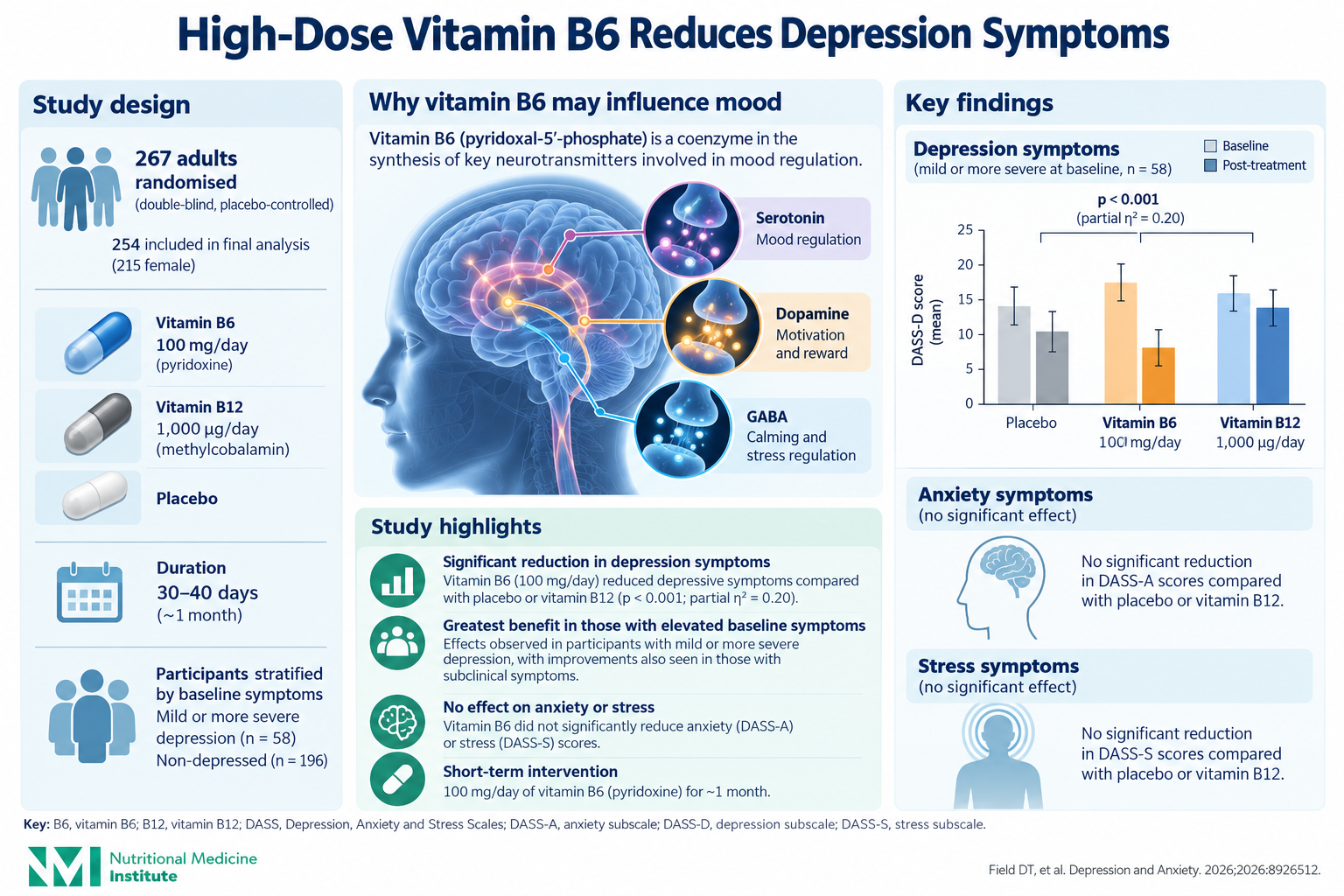
Interestingly, benefits also extended to participants with elevated depressive symptoms below the threshold for mild depression, suggesting potential relevance to subclinical mood disturbances. However, vitamin B6 did not significantly improve anxiety or stress scores.
Some limitations include a predominantly female cohort, participants were not recruited from a clinical depression population, and baseline vitamin B6 status was unknown.
Importantly, 100 mg/day of pyridoxine represents a pharmacological dose, and prolonged supplementation may cause peripheral neuropathy. Clinical supervision and careful consideration of cumulative supplement exposure are therefore important if using B6 in practice.
Overall, these findings provide encouraging preliminary evidence that vitamin B6 may improve depressive symptoms, particularly in individuals with elevated baseline symptom severity. Larger clinical trials are needed to better establish effective and safe dosing and identify responsive patient subgroups.