

Sep 28, 2026
Benjamin Brown
In a new review in the journal Nutrients investigators examine how common single nucleotide polymorphisms (SNPs) may influence cardiovascular risk and dietary responses. They identify plausible applications in personalised nutrition and conclude that genetic testing could complement standard clinical care.
The paper distinguishes common SNPs from rare, highly penetrant mutations that cause familial cardiovascular disorders. Most common variants exert small effects individually but may become more relevant when combined with dietary exposure, metabolic phenotype and conventional risk factors. The authors discuss variants involving pathways such as lipoprotein transport, one-carbon metabolism, glucose regulation, vascular function and weight control.
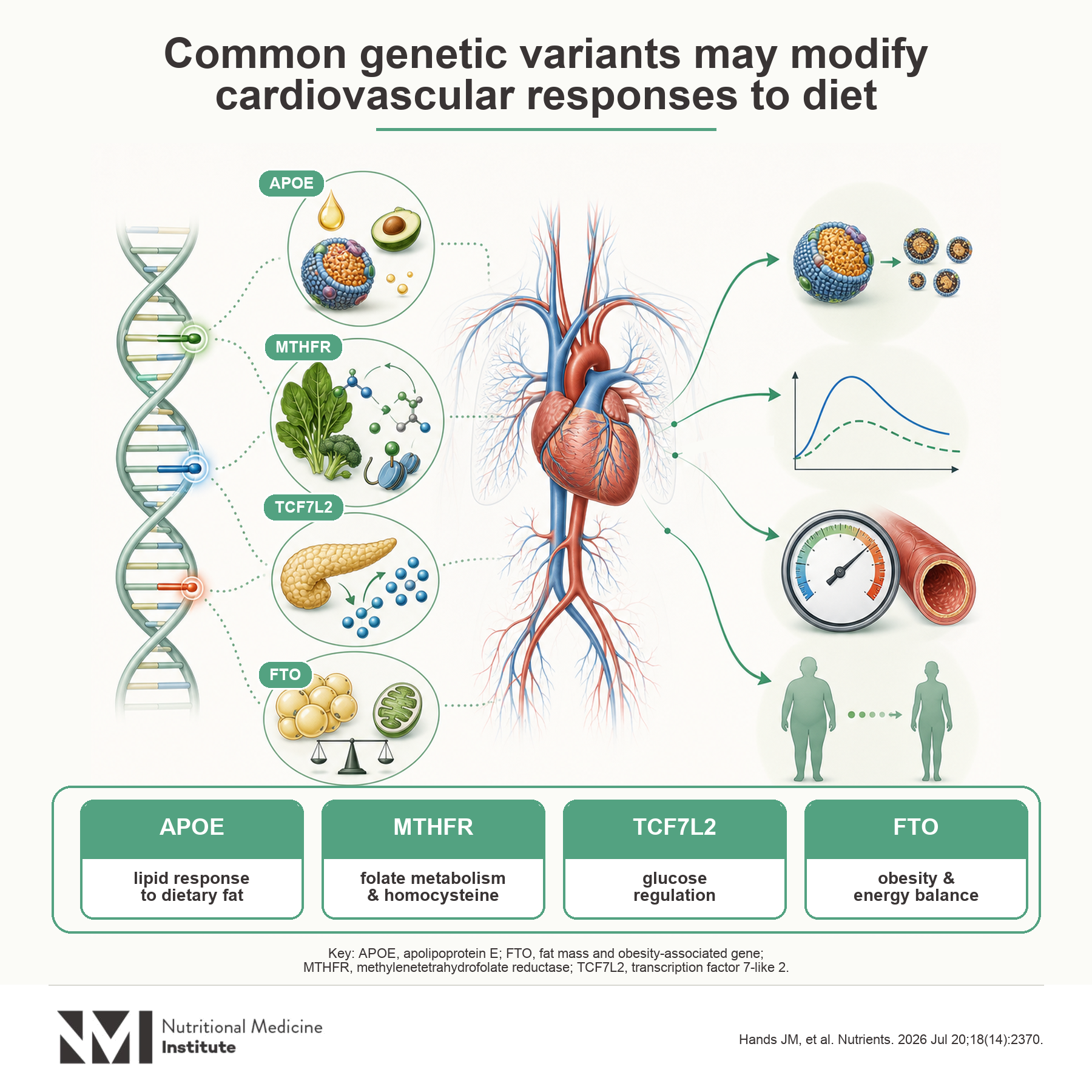
Several examples illustrate the potential clinical value. APOE variants may modify lipid responses to dietary fat, while MTHFR polymorphisms can influence folate metabolism and homocysteine concentrations. Variants in FTO and TCF7L2 are associated with obesity and impaired glucose regulation, respectively, and may provide additional context when treating cardiometabolic risk. Other gene–diet relationships involve caffeine metabolism, sodium sensitivity, omega-3 fatty acids and Mediterranean-style dietary patterns.
Study highlights:
- Common SNPs generally modify cardiovascular susceptibility rather than determine disease.
- Genotype may partly explain variable lipid, glucose or blood-pressure responses to diet.
- APOE, MTHFR, FTO and TCF7L2 are among the clinically relevant genes discussed.
- Genetic results should be interpreted alongside phenotype, diet, medication, ancestry and family history.
- Evidence supporting genotype-directed dietary prescriptions remains inconsistent and requires stronger prospective trials.
APOE: The ε4 allele is associated with higher LDL cholesterol and cardiovascular risk and may alter the lipid response to dietary fat. For personalised nutrition, ε4 carriers may warrant particular attention to LDL cholesterol and benefit from limiting saturated fat while favouring unsaturated fats, fibre-rich foods and an overall Mediterranean-style pattern; however, genotype-specific responses are inconsistent, so lipid measurements should guide treatment.
MTHFR: The C677T variant—particularly the TT genotype—reduces MTHFR activity and can contribute to lower folate status and higher homocysteine, especially when folate intake is inadequate. Clinically, it may justify assessing folate, vitamin B12 and homocysteine and ensuring adequate food-based folate and relevant B vitamins, but it does not automatically indicate a need for supplements.
FTO: Risk alleles such as rs9939609 are associated with greater susceptibility to increased appetite, adiposity and related cardiometabolic risk. They may identify people who need support with energy intake, satiety-promoting foods, physical activity and long-term weight management, but there is insufficient evidence for a unique “FTO diet”; healthy lifestyle intervention can substantially moderate the inherited risk.
TCF7L2: The rs7903146 risk allele is strongly associated with type 2 diabetes, principally through impaired insulin secretion and glucose regulation. Personalised care should therefore emphasise monitoring glucose or HbA1c, weight management, dietary fibre, minimally processed carbohydrates and a Mediterranean or low-glycaemic-load dietary pattern; nevertheless, the evidence does not yet support a genotype-specific carbohydrate prescription.
For one-to-one practice, the paper supports selective rather than routine testing. A result is most useful when it answers a defined clinical question and can plausibly alter management. Testing may add context in patients with unexplained dyslipidaemia, a strong family history, unusual treatment responses or persistent risk despite appropriate lifestyle intervention. However, clinicians should avoid presenting common SNPs as diagnoses or deterministic forecasts. Small effect sizes, population-specific associations, inconsistent replication and commercial test panels of variable quality can create false precision.
Pre-test counselling is therefore essential. Practitioners should establish analytical validity, clarify the strength of evidence connecting a variant to an intervention, and explain privacy implications and uncertain findings. Referral to genetics or lipid specialists remains appropriate when a monogenic disorder is suspected.
In summary, the review presents common SNP testing as a promising adjunct to cardiovascular nutrition—not a shortcut to personalised prescribing. Its current strength lies in enriching clinical context and patient discussion. Until genotype-guided interventions demonstrate reproducible improvements in cardiovascular outcomes, phenotype, family history, validated biomarkers and evidence-based dietary patterns should remain the foundation of care.