NMI Webinar
The Gut Microbiome’s Role in Sleep: The Power of Timing
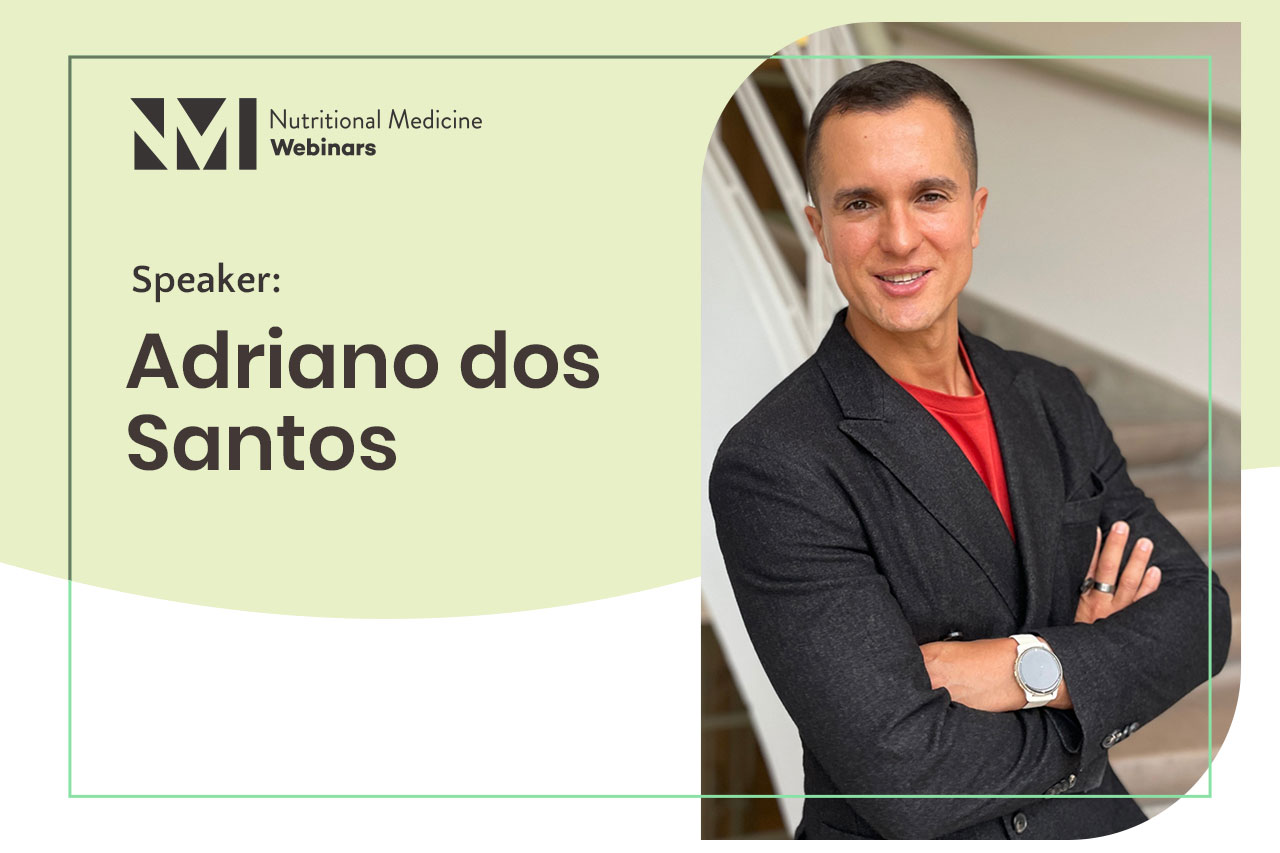
with Adriano dos Santos
Date: Tuesday 22nd September 2026
Time: 3pm (UK time)
Duration: 1-hour
Location: Online (Zoom)
Receive: Access to the live online event, unlimited access to the on-demand video recording, downloadable presentation notes, CPD certificate.
Continuing Professional Development (CPD) approved by the CPD Certification Service (CPD UK), the British Association for Nutrition and Lifestyle Medicine (BANT) and the Nutritional Therapists of Ireland (NTOI).
Webinar description:
Roughly a third of adults worldwide report chronically insufficient sleep, and functional gastrointestinal disorders affect a comparable share of the population. These are usually treated as separate problems, in separate consultations, by separate specialities. A growing body of evidence says they are one conversation: the gut microbiome and the circadian system regulate each other, and sleep sits at the intersection.
This lecture presents the gut–sleep axis as a clinical system rather than a curiosity. We begin with chronobiology: the two-process model of sleep regulation, peripheral clocks, and the striking finding that the microbiome itself oscillates across the day, with feeding time and light exposure as its principal cues. Drawing on the presenter’s research in the field of gut microbiome and sleep, and his Oxford research on evening dim-light exposure and gut microbiome diversity, we examine the mechanistic pathways through which gut microbes shape sleep or get affected by sleep disruption or insufficiency.
The second half is unapologetically practical. We introduce the Circadian Matrix, a five-layer systems framework for integrating timing into assessment and treatment, and the Circadian Health Index (CHI), a proof-of-principle composite score of circadian health built on established instruments (dim-light melatonin onset, cortisol awakening response, actigraphy-derived stability, social jetlag and validated questionnaires). A tiered diagnostic toolkit shows what every patient needs, what to add for complex cases, and why stool samples must be collected at a fixed circadian time. A full case study will be presented with a full assessment, a phased treatment, chrononutrition, sleep protocol and microbiome support, and the patient’s health outcomes.
Attendees will leave with a repeatable workflow: assess timing, not just content; sequence interventions; and re-measure at the same circadian phase. Better sleep does not start only in the brain. It begins in the gut.
Learning objectives:
- Describe the bidirectional relationship between the gut microbiome and the circadian system, and the principal mechanistic pathways by which gut microbes influence sleep, including gamma-aminobutyric acid (GABA) production, immune modulation, fermentation of fibre to short-chain fatty acids (SCFAs), tryptophan and melatonin metabolism, and enteroendocrine signalling.
- Explain how circadian misalignment, including evening light exposure, shift work and irregular feeding, disrupts microbial rhythmicity, sleep architecture and downstream metabolic and immune health.
- Apply a structured, tiered assessment of circadian health in clinical practice, selecting appropriate tools (validated chronotype and sleep questionnaires, actigraphy, dim-light melatonin onset, cortisol awakening response, circadian-calibrated stool testing) and interpreting them as a composite picture rather than isolated results.
- Design and sequence personalised, time-anchored interventions, combining light therapy, chrononutrition and meal timing, sleep scheduling and targeted microbiome support, and evaluate response with repeat assessment at the same circadian phase.
Speaker
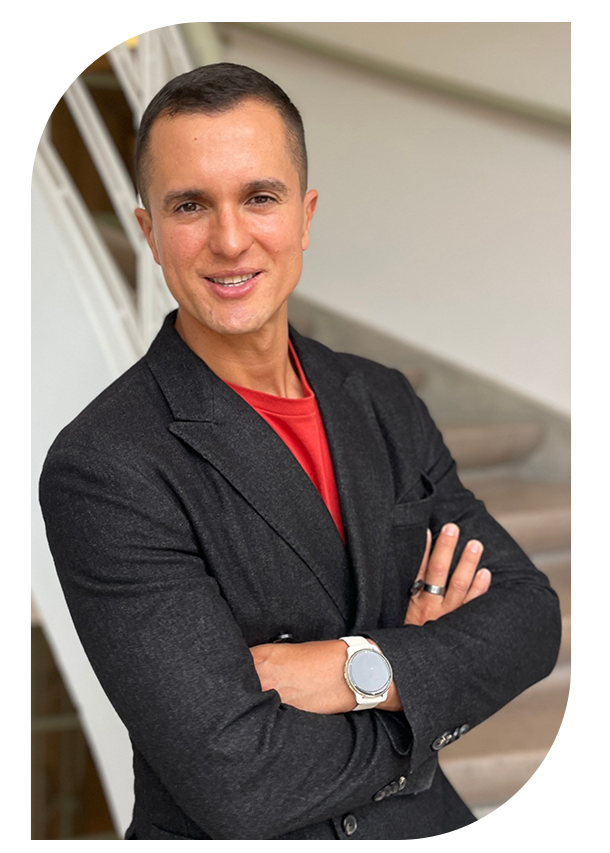
Adriano dos Santos
Adriano dos Santos, The Circadian Nutritionist™, is a Registered Nutritionist and functional medicine practitioner in The Hague specialising in sleep medicine, chrononutrition and the gut microbiome. He is the author of The Gut Sleep Solution and creator of the Circadian Health Index. His research varies from an Oxford experiment on evening light and the microbiome, a publication on short chain fatty acids and peripheral circadian clocks, and the Circadian Health Index methodology.
He holds a BSc in Nutrition Science and an MSc in Sleep Medicine from the University Hospital of Bern. His Oxford research investigated the effect of dim light in the evening on the diversity of the human gut microbiome. He is the author of a research on the microbiota–gut–brain axis in metabolic syndrome and sleep disorders, published in Nutrients, and of work on short-chain fatty acids (SCFAs) and peripheral circadian clocks. He is the creator of the Circadian Health Index (CHI), a multidomain framework for quantifying circadian health developed together with Professor Thomas Kantermann.
Adriano is a member of the Institute for Functional Medicine (IFMCP), a Fellow of the European Sleep Research Society (ESRS), a Fellow of the Royal Society of Medicine (RSM) and a member of MBOG, the Dutch association for integrative medicine. He is the author of The Gut Sleep Solution. In clinical practice he translates chronobiology and microbiome science into practical, timed interventions, built on a simple premise: when we eat, sleep and see light matters as much as what we do.
Additional information:
Expert qualifications: Speakers are selected based on verifiable expertise in their subject area, including post-graduate qualifications, specialist practice, and authorship of original peer-reviewed research.
Standards for conflict of interest and disclosure: Webinars are independent and free of commercial bias that may impact the quality and integrity of educational content, such as the mention of commercial products and services. View our standards for conflict of interest and disclosure.
Funding source: Speaker remuneration is provided by the Nutritional Medicine Institute (NMI).
Disclaimer: The contents of webinars such as this are for educational purposes and intended for health professionals. This information is not a substitution for standard medical care. Health professionals are solely responsible for the care and treatment provided to their own patients.