NMI Webinar
Reframing Menopause: A Root-Cause, Systems-Based, Sequenced Approach Featuring Nutrition and Lifestyle
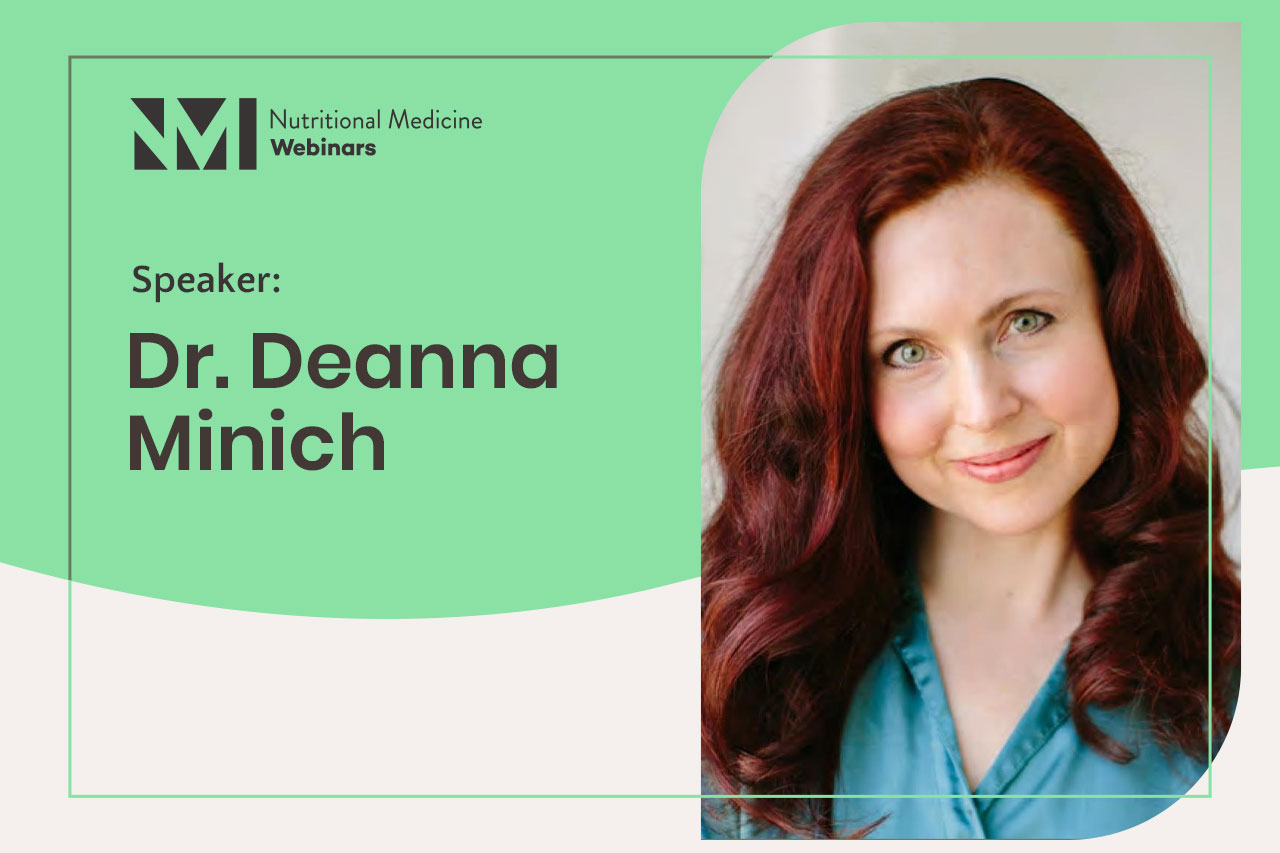
with Dr. Deanna Minich
Date: Wednesday 29th April 2026
Time: 3pm (BST)
Duration: 1-hour
Location: Online (Zoom)
Receive: Access to the live online event, unlimited access to the on-demand video recording, downloadable presentation notes, CPD certificate.

Continuing Professional Development (CPD) approved by the CPD Certification Service (CPD UK), the British Association for Nutrition and Lifestyle Medicine (BANT) and the Nutritional Therapists of Ireland (NTOI).
Webinar description:
Menopause is often reduced to a hormonal deficiency narrative. Yet, clinicians increasingly recognize that midlife female physiology is a multidimensional transition involving metabolism, detoxification, circadian rhythms, inflammation, mitochondrial integrity, and neuroendocrine signaling. This presentation reframes menopause through a root-cause, systems-biology lens and positions nutrition and lifestyle as foundational drivers of regulation across the endocrine, metabolic, and neuroimmune networks.
Rather than focusing solely on isolated hormone levels, this talk introduces a sequenced approach to clinical assessment and intervention. Hormone therapy, when appropriate, becomes one tool within a broader, ordered framework that prioritizes restoring physiological coherence before layering on additional inputs. Using a structured progression—from stress and sleep regulation to thyroid-adrenal-mitochondrial support, metabolic flexibility, gut-liver detoxification capacity, and ultimately estrogen and progesterone metabolism—the presentation offers practitioners a clear roadmap for timing interventions in a way that aligns with known mechanisms of hormone action and biotransformation.
Nutrition is integrated throughout as both a molecular and energetic signal, shaping steroidogenesis, receptor sensitivity, mitochondrial function, immune tone, and circadian alignment. Emphasis is placed on nutrient-dense dietary patterns, phytonutrient diversity, melatonin-responsive systems, amino acid and fatty acid substrates, and the emerging role of the “photometabolome” in midlife physiology.
Lifestyle factors—including sleep-wake organization, light exposure, stress modulation, movement, environmental toxicant load, and psychosocial context—are examined as first-line levers that recalibrate the HPA axis, autonomic system, and inflammatory pathways that influence menopausal symptom expression.
Attendees will learn how to evaluate hormone metabolites to better understand tissue-level signaling rather than relying solely on serum parent hormones. The presentation connects these biochemical insights with clinical patterns such as estrogen dominance, low progesterone resilience, cortisol-driven vasomotor symptoms, mitochondrial-driven fatigue, and inflammatory or histamine-related reactivity.
Ultimately, this session offers a comprehensive, actionable framework for practitioners seeking to support women through menopause with precision, depth, and personalization. By sequencing interventions thoughtfully and addressing underlying physiological imbalances first, clinicians can enhance therapeutic outcomes, minimize symptom burden, and help women move through midlife with strength, clarity, and vitality.
Learning objectives:
- Describe a root-cause, systems-biology model of menopause that extends beyond hormone replacement to include metabolic, mitochondrial, circadian, detoxification, and neuroimmune drivers.
- Identify key nutrition and lifestyle inputs that modulate steroidogenesis, hormone receptor sensitivity, mitochondrial function, and inflammatory tone during midlife.
- Apply a sequenced clinical framework that prioritizes foundational regulation (stress/sleep, thyroid-adrenal-mitochondrial networks, metabolic flexibility, gut-liver pathways) before targeted hormonal interventions.
- Integrate nutrition, lifestyle, and personalized timing into a menopause care plan to improve symptom expression, support whole-body physiology, and enhance long-term health outcomes.
Speaker
Dr. Deanna Minich, PhD
Dr. Deanna Minich is an internationally recognized nutrition scientist, educator, and author with more than twenty years of experience in functional medicine, nutritional biochemistry, and lifestyle-based health transformation. She holds a PhD in Medical Sciences, a Master of Science in Nutrition and Dietetics, and is a Certified Nutrition Specialist (CNS) and Institute for Functional Medicine Certified Practitioner (IFMCP).
Throughout her career, Dr. Minich has pioneered a whole-person approach that bridges rigorous science with systems biology, lifestyle medicine, and the psychology of eating. Her research, teaching, and writing explore the interconnected roles of food, metabolism, hormones, detoxification pathways, circadian rhythms, and environmental exposures in shaping health across the lifespan. She has authored seven books, including The Rainbow Diet and Whole Detox, and publishes on nutrition, metabolism, and women’s health.
Dr. Minich is a sought-after speaker who has lectured at medical conferences, universities, health institutions, and professional associations worldwide. She has taught courses in functional nutrition, metabolic detoxification, environmental health, and mind-body approaches to healing, and has contributed to numerous practitioner training programs.
In addition to being the Chief Science Officer at Symphony Natural Health where she leads the medical team and shapes the scientific direction of the company, she currently serves on the Board of Directors for the Personalized Lifestyle Medicine Institute (PLMI). She is the 2025 recipient of the prestigious Linus & Ava Helen Pauling Award in Functional Medicine, recognizing her contributions to advancing personalized, systems-based clinical care.
Today, Dr. Minich continues to integrate her scientific expertise with her passion for creativity, color, and human potential. Through her teaching, publications, and evolving Food & Spirit framework, she supports both clinicians and individuals in using nutrition and lifestyle as powerful tools for transformation and whole-person healing.

Additional information:
Expert qualifications: Speakers are selected based on verifiable expertise in their subject area, including post-graduate qualifications, specialist practice, and authorship of original peer-reviewed research.
Standards for conflict of interest and disclosure: Webinars are independent and free of commercial bias that may impact the quality and integrity of educational content, such as the mention of commercial products and services. View our standards for conflict of interest and disclosure.
Funding source: Speaker remuneration is provided by the Nutritional Medicine Institute (NMI).
Disclaimer: The contents of webinars such as this are for educational purposes and intended for health professionals. This information is not a substitution for standard medical care. Health professionals are solely responsible for the care and treatment provided to their own patients.